
Country
Syria
Beit Falestini
& Olivier Jobard
Open in the morning for boys and in the afternoon for girls.
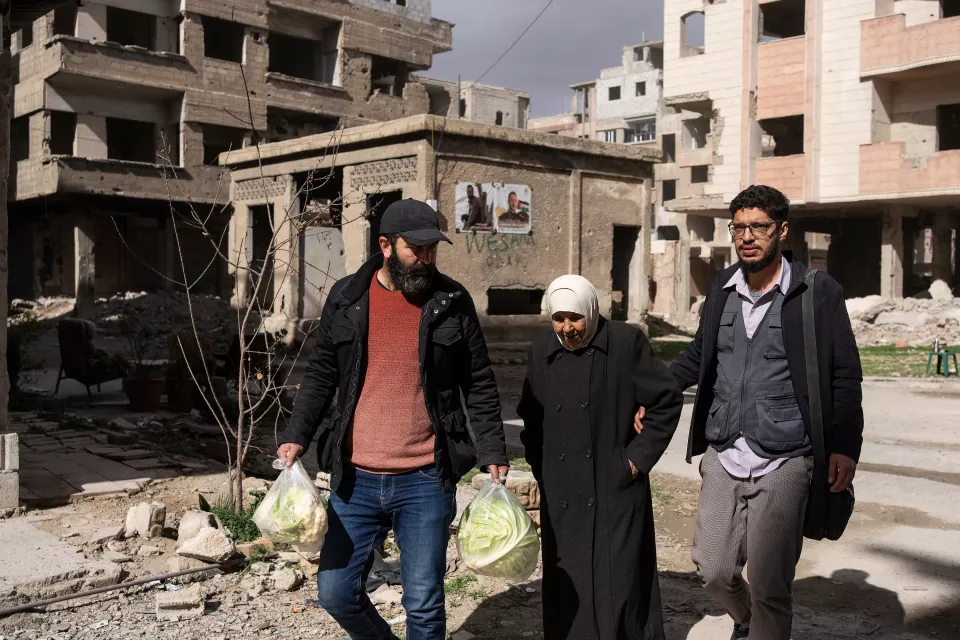
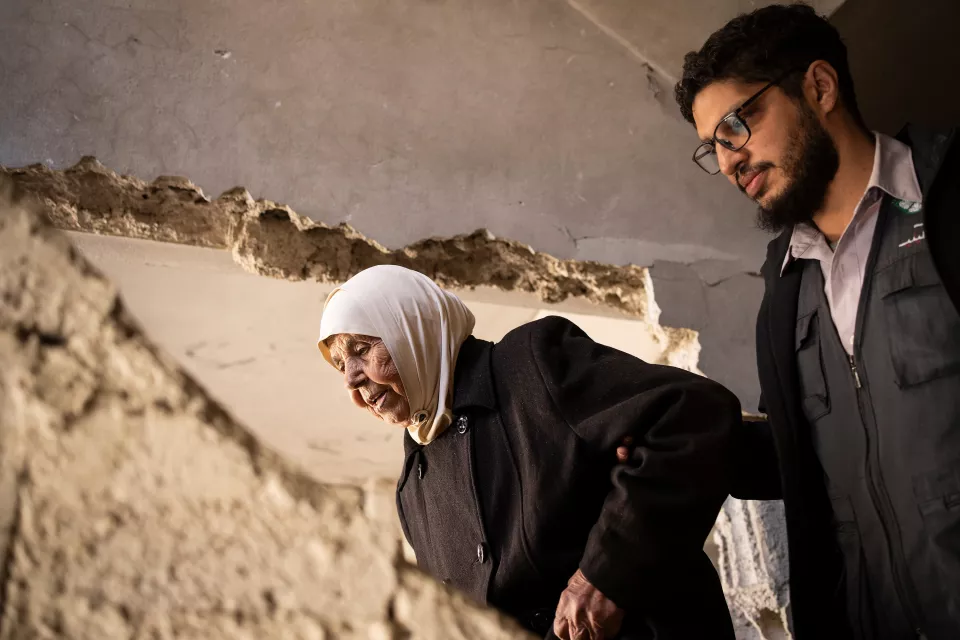
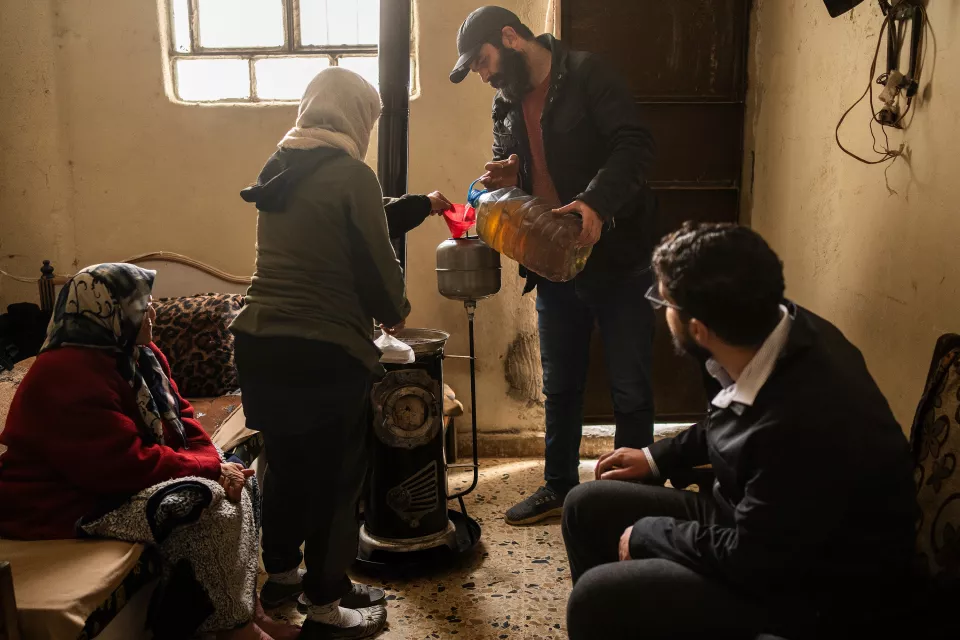
They are helping Yarmouk Makboula Jouriyyeh, whose husband is ill and who stayed in Yarmouk during the siege.
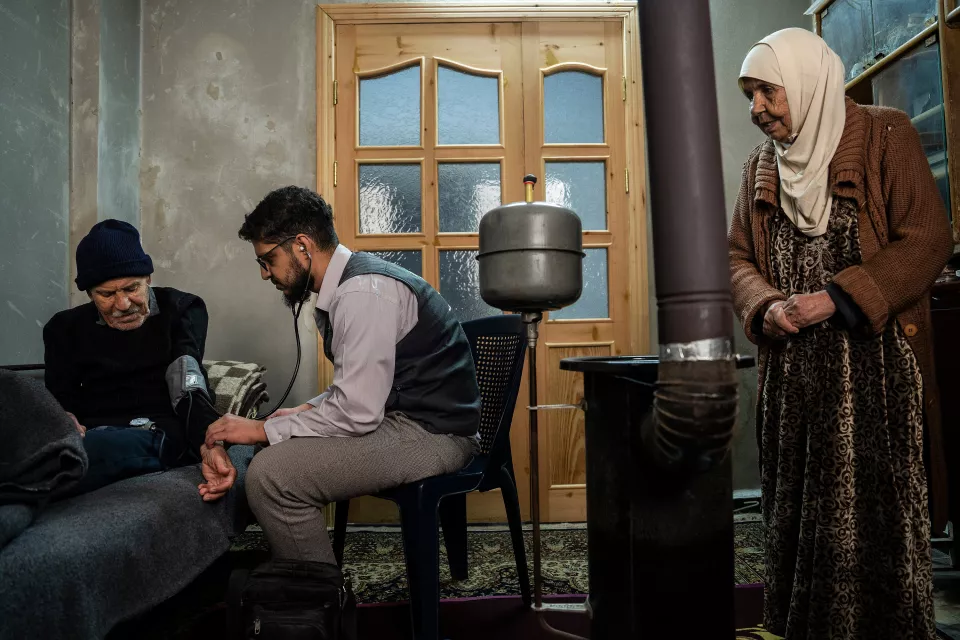
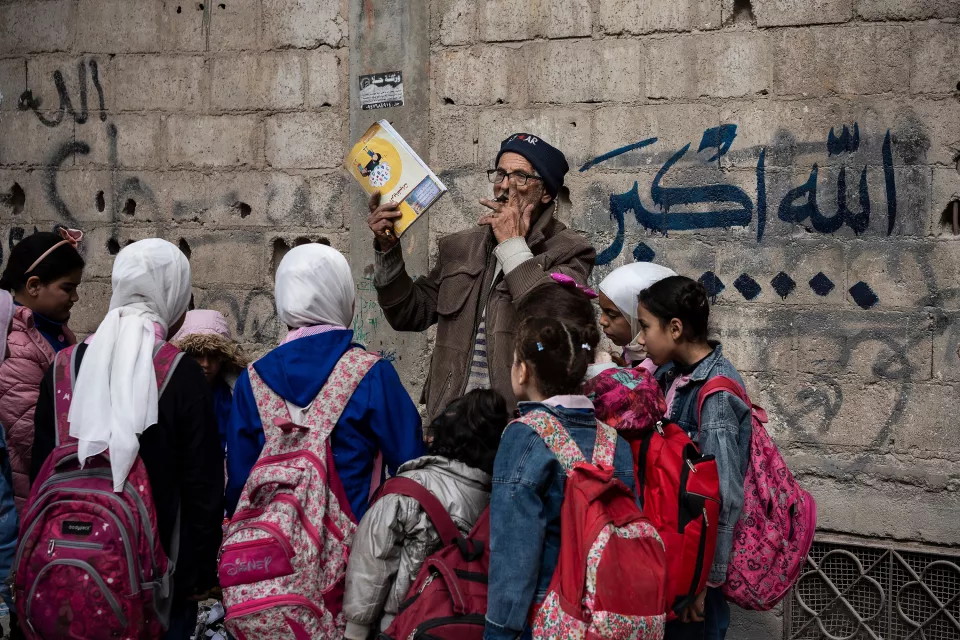
He is treating Hassan Hammond, 70, who was displaced from the Golan in 1967 and lived in Yarmouk during the siege with his wife Makboula Jouriyyeh.
-
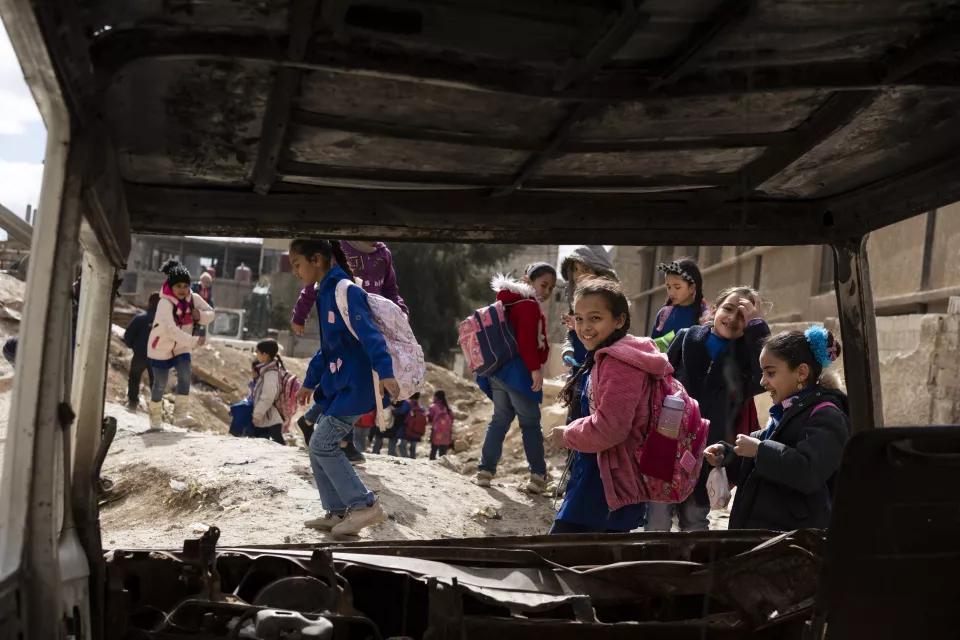
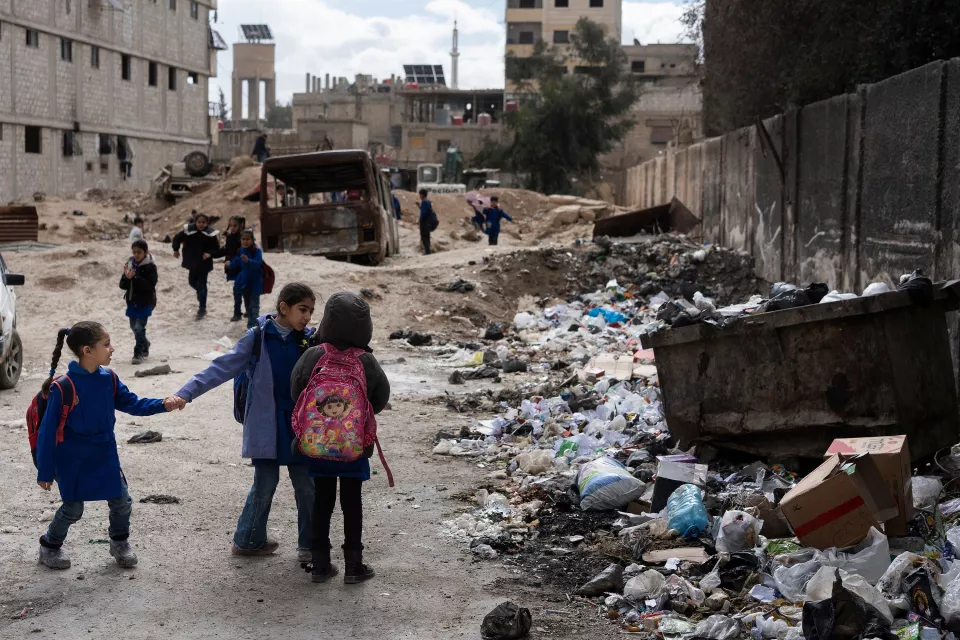
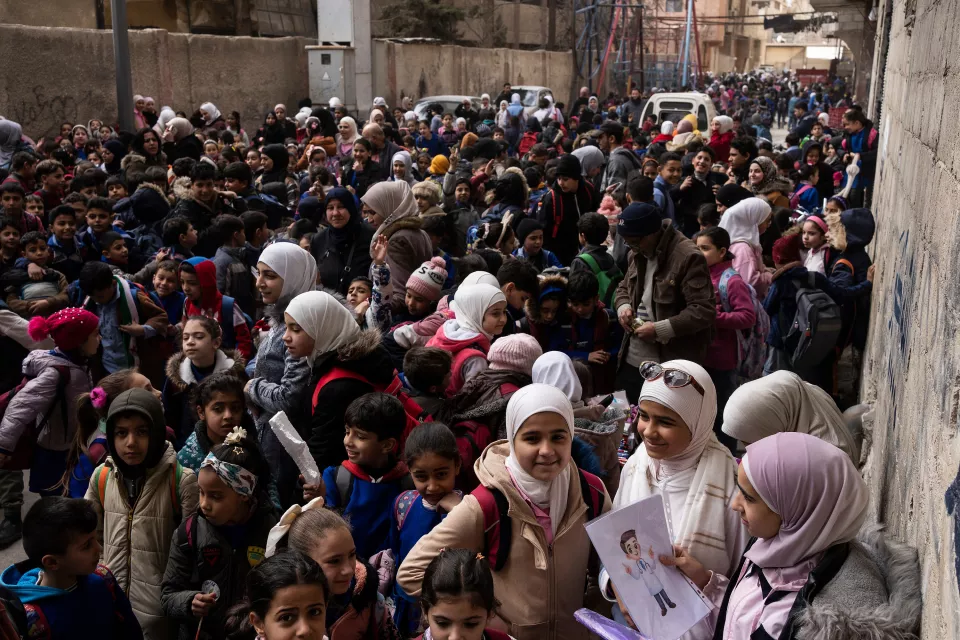
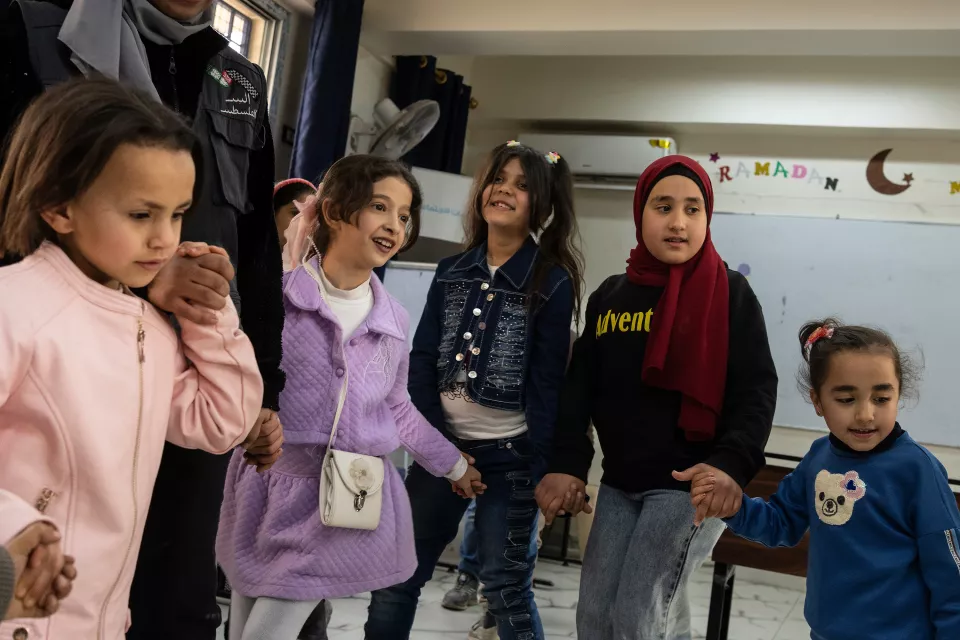
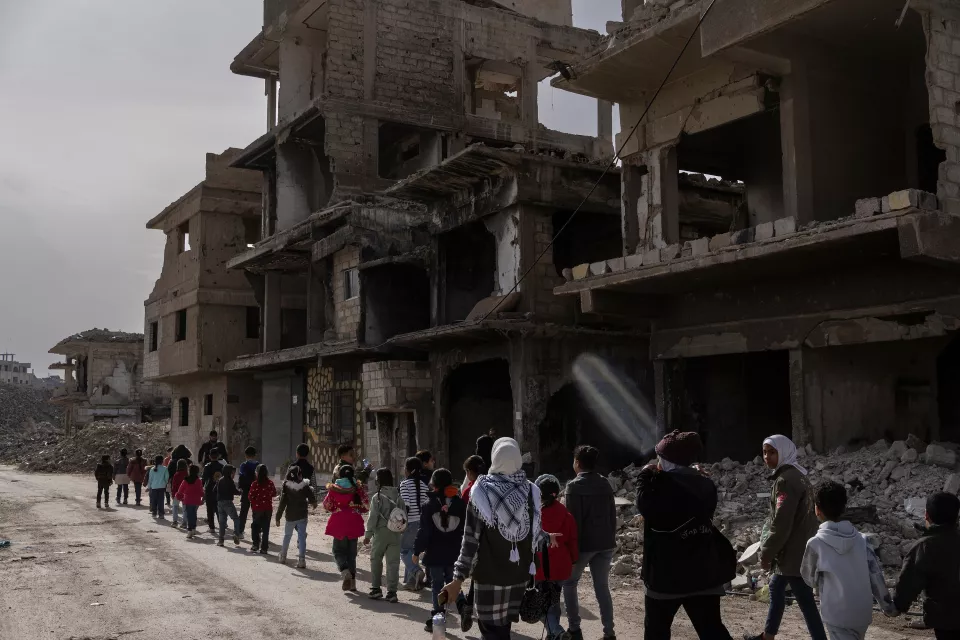
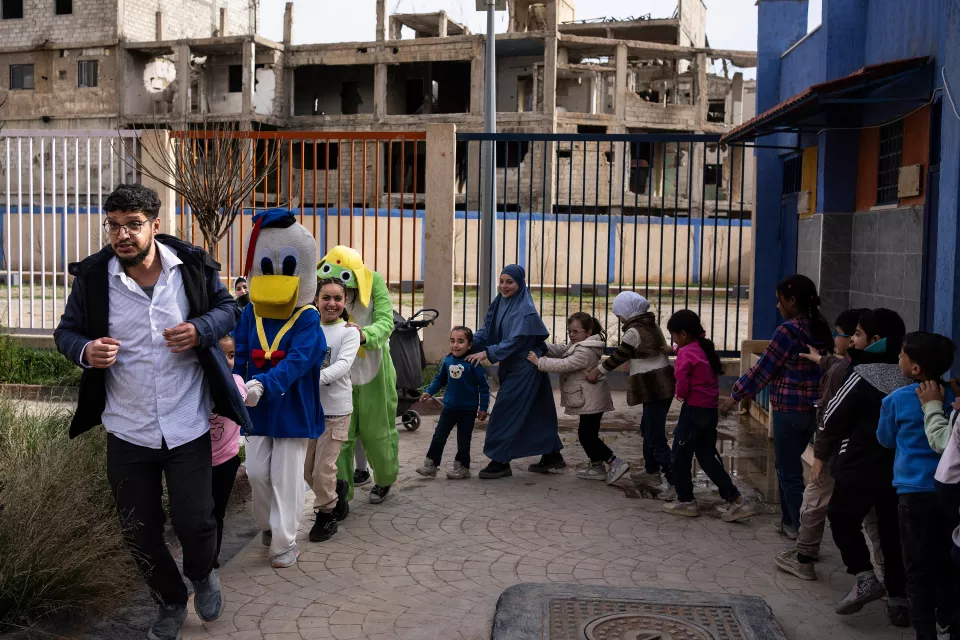
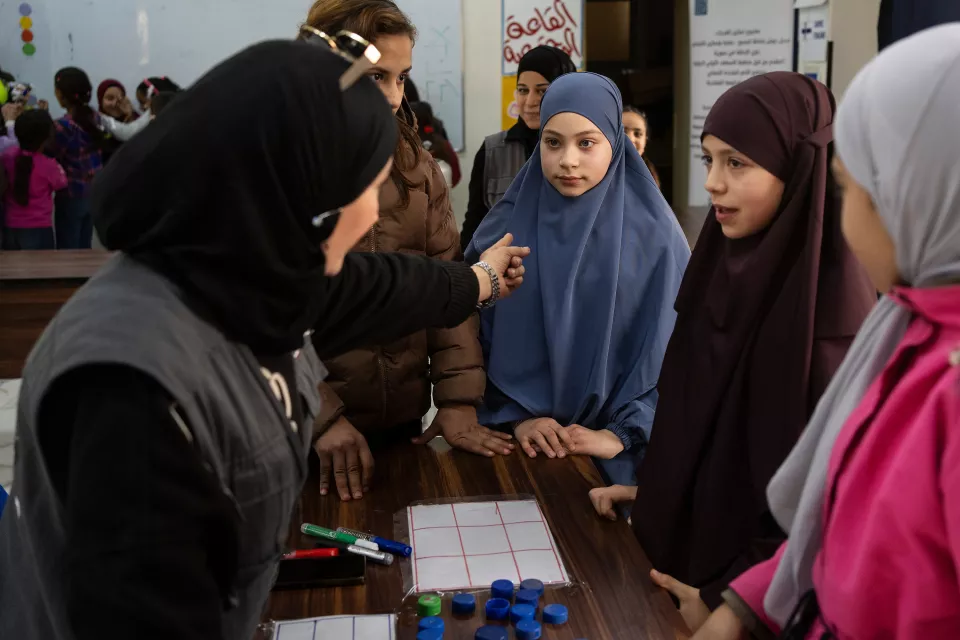
Mjedel School is one of the two schools supported by Beit Felestini since the fall of Bashar al-Assad. -
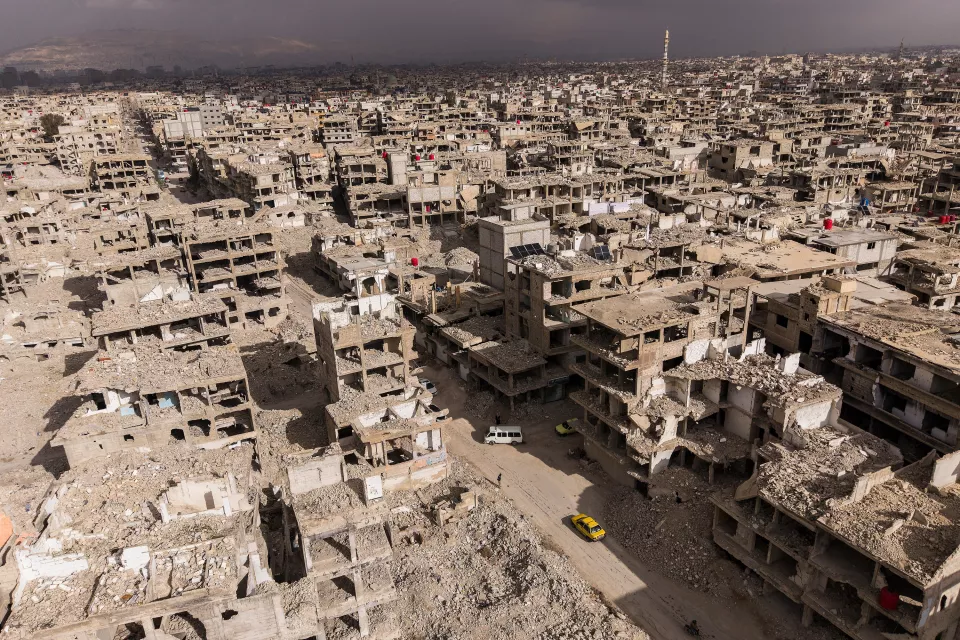
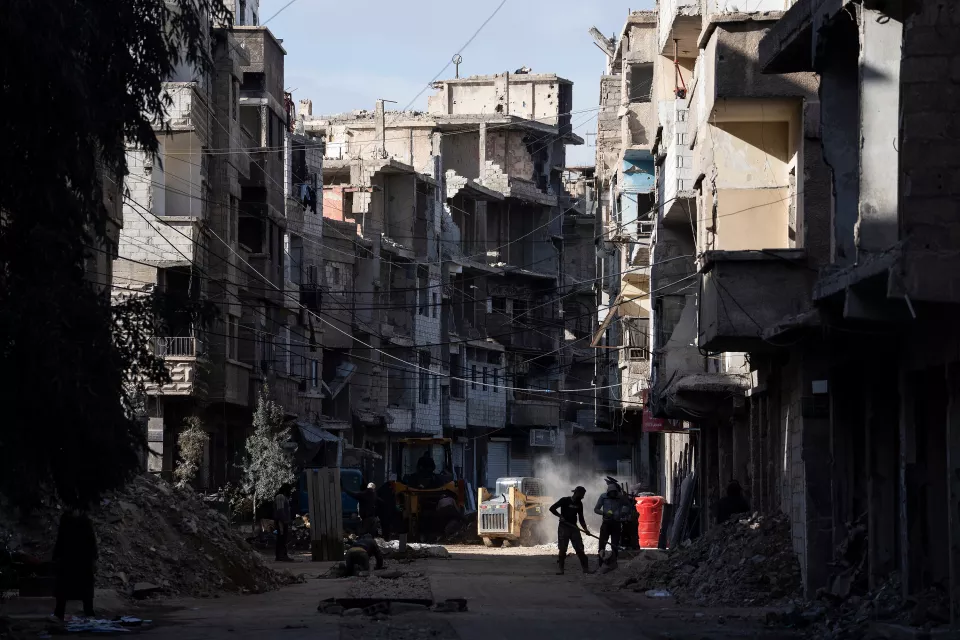
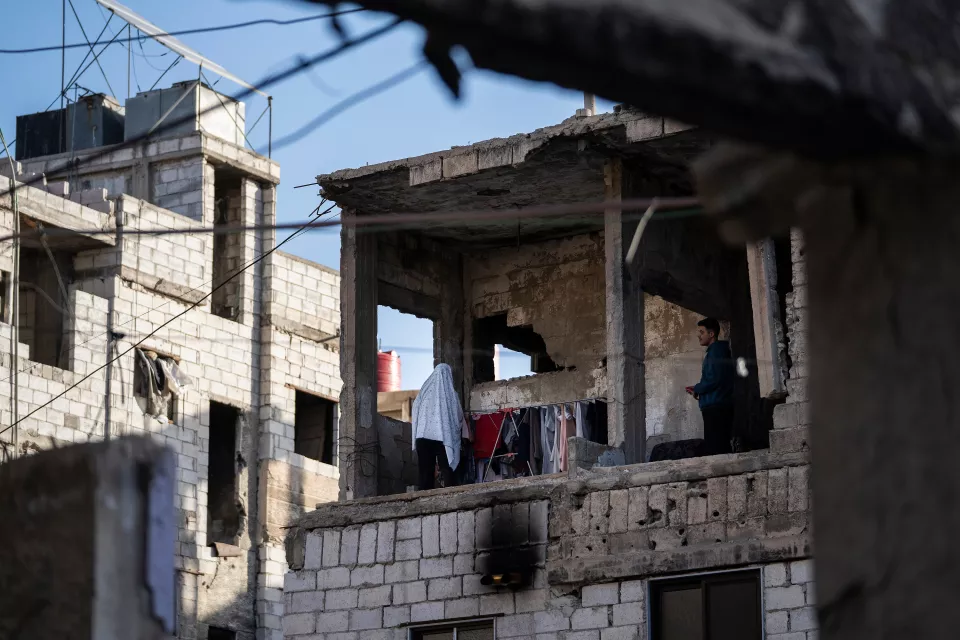
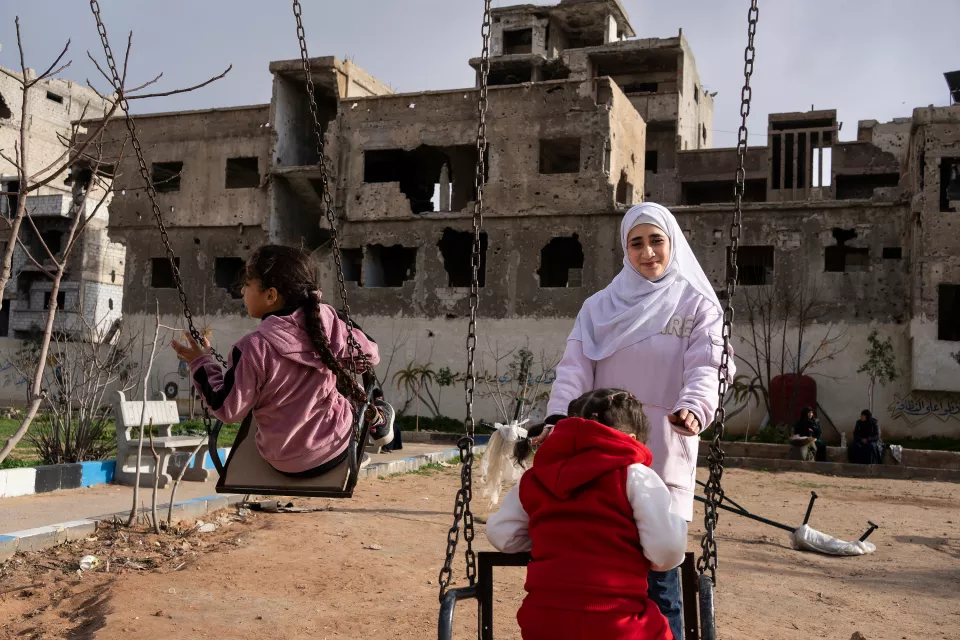
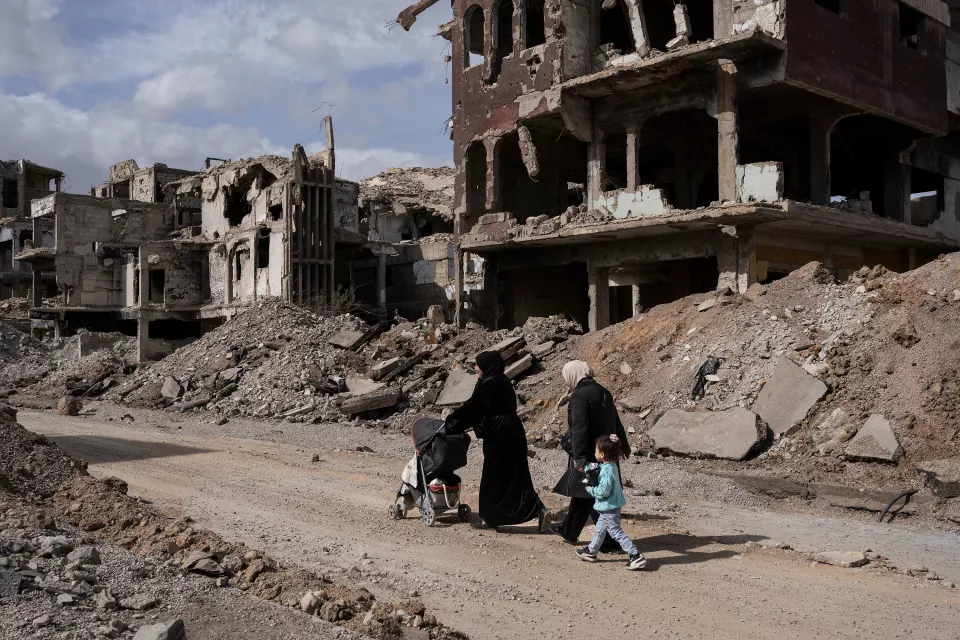
Established in 1957, Yarmouk Camp spans 2.1 square kilometres and is located approximately eight kilometres from Damascus. -
Before the war in Syria, it was home to around 200,000 Palestine Refugees, making it the largest Palestine Refugee community in the country and a key commercial hub known for its vibrant markets and affordable goods. -
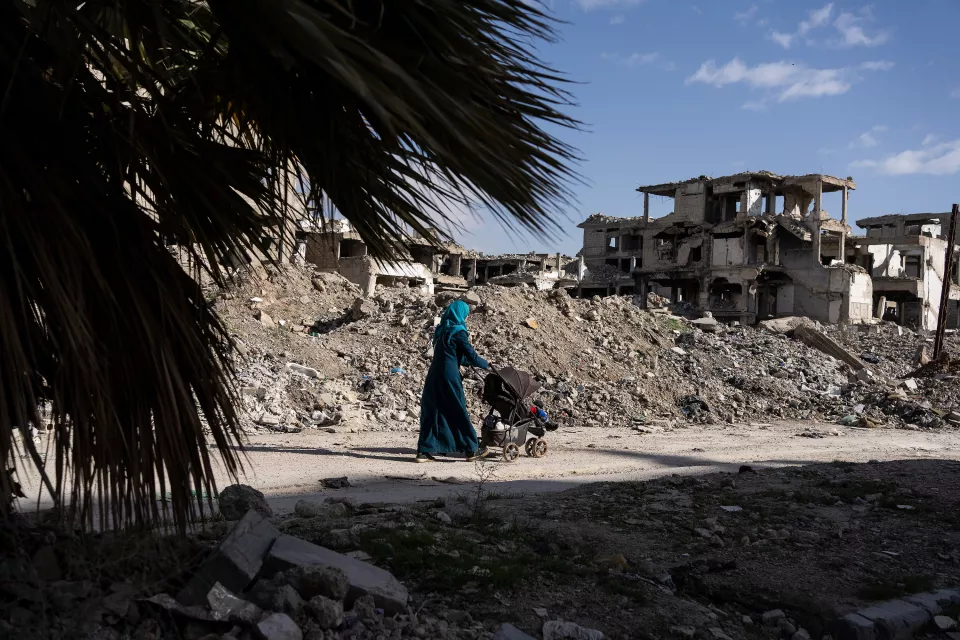
Today, it is estimated that 65,000 people have resettled in Yarmouk. -
-
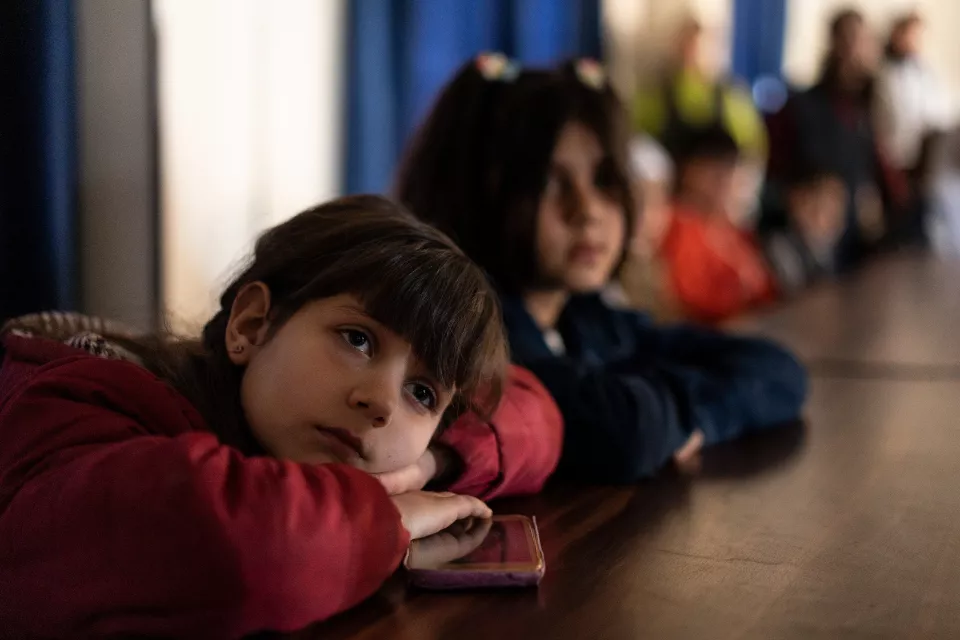
schoolchildren of Mjedel school -
There are 1600 students.
Open in the morning for boys and in the afternoon for girls. -
Mjedel school, one of the two schools that have been covered over since the fall of Bashar al-Assad and are managed by UNRWA. -
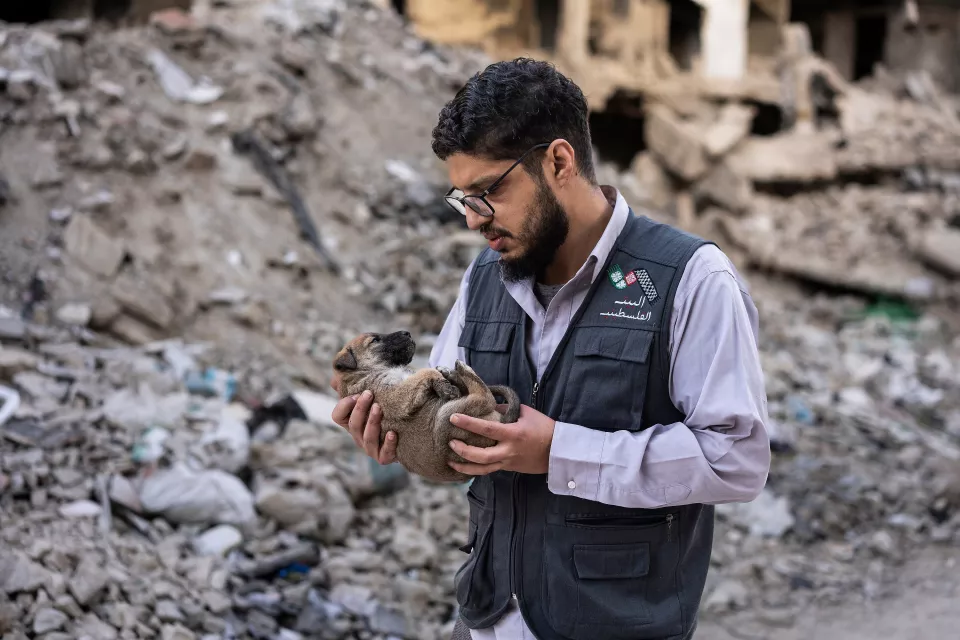
Dr. Khaldoun Muawiyah Al-Mallah, 43, director and founder of The Palestinian House. -
The director and founder of The Palestinian House with Yamin Hammeed, volunteer .
They are helping Yarmouk Makboula Jouriyyeh, whose husband is ill and who stayed in Yarmouk during the siege. -
Dr. Khaldoun Muawiyah Al-Mallah is helping Yarmouk Makboula Jouriyyeh, whose husband is ill and who stayed in Yarmouk during the siege. -
Dr. Khaldoun Muawiyah Al-Mallah, director and founder of The Palestinian House
He is treating Hassan Hammond, 70, who was displaced from the Golan in 1967 and lived in Yarmouk during the siege with his wife Makboula Jouriyyeh. -
-
-
Dr. Khaldoun Muawiyah Al-Mallah, 43, director and founder of The Palestinian House. -
-
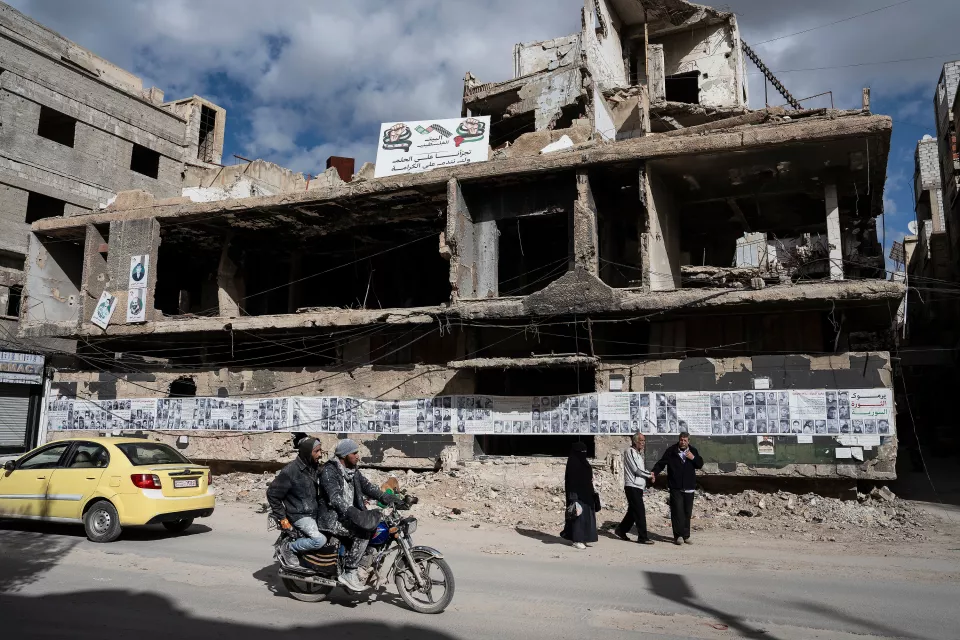
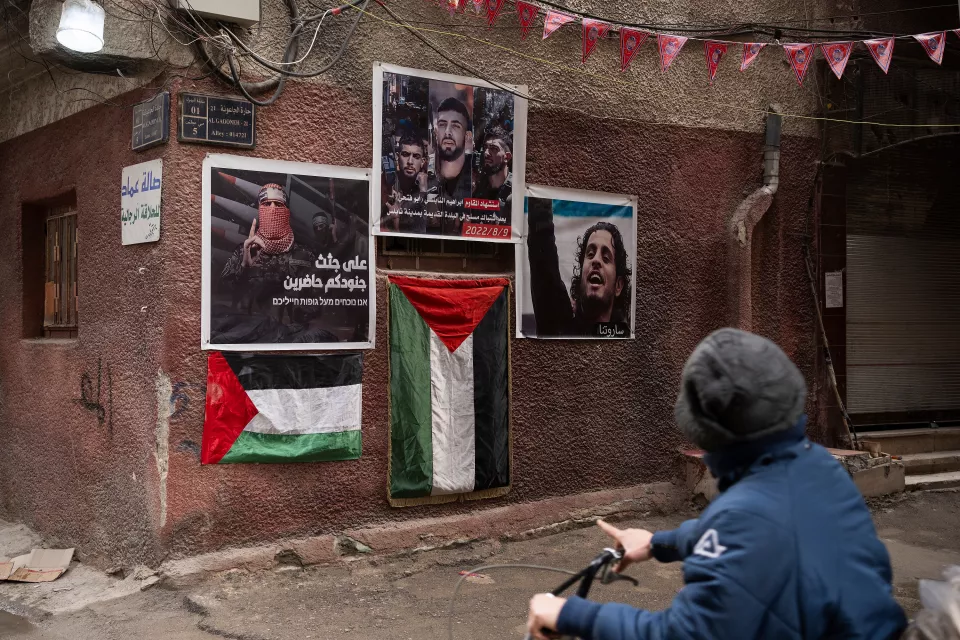
The Palestinian House has printed images of the 1500 martyrs of the Yarmouk camp through a chronology of events. -
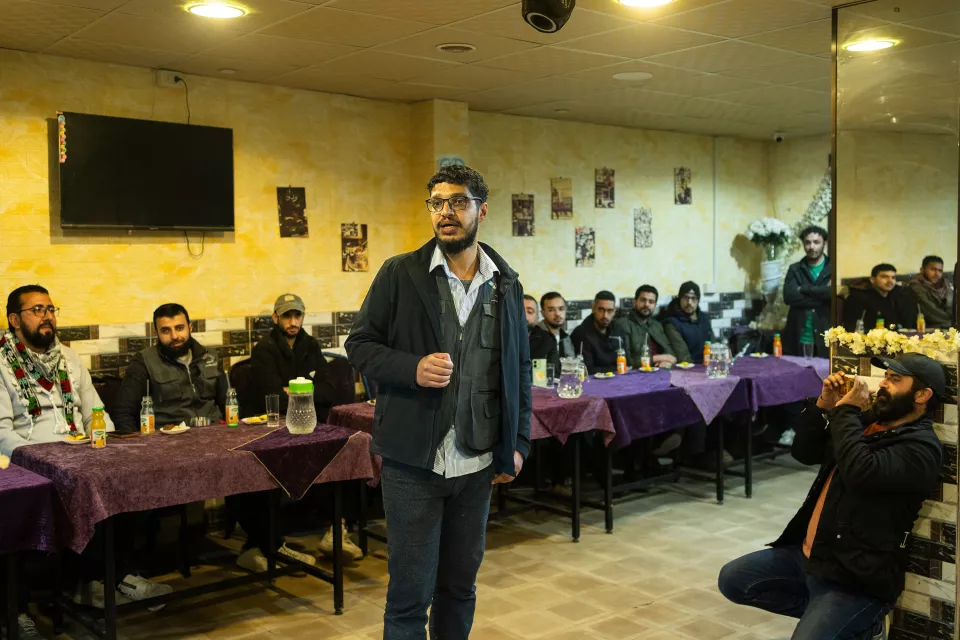
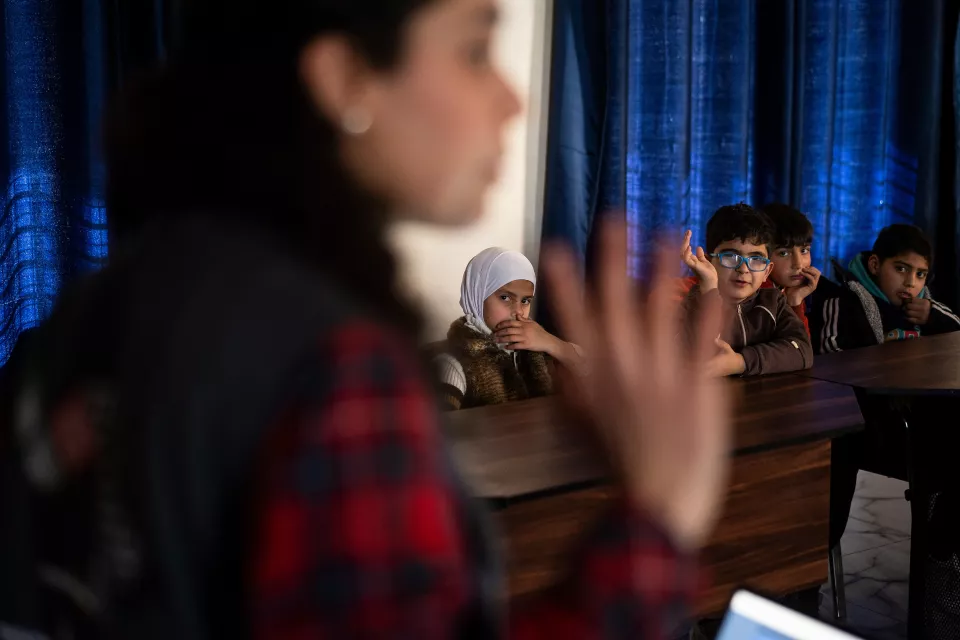
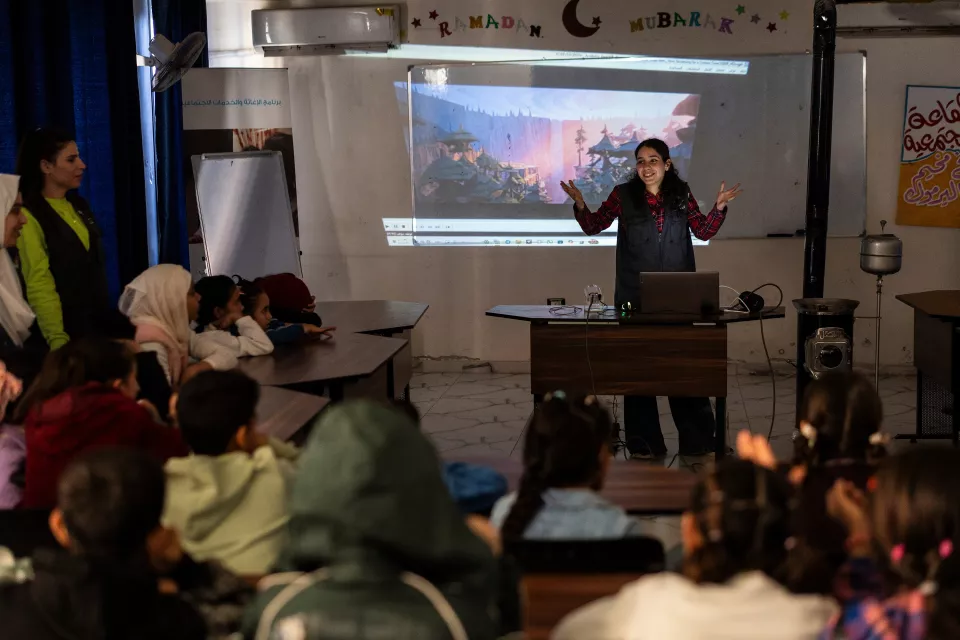
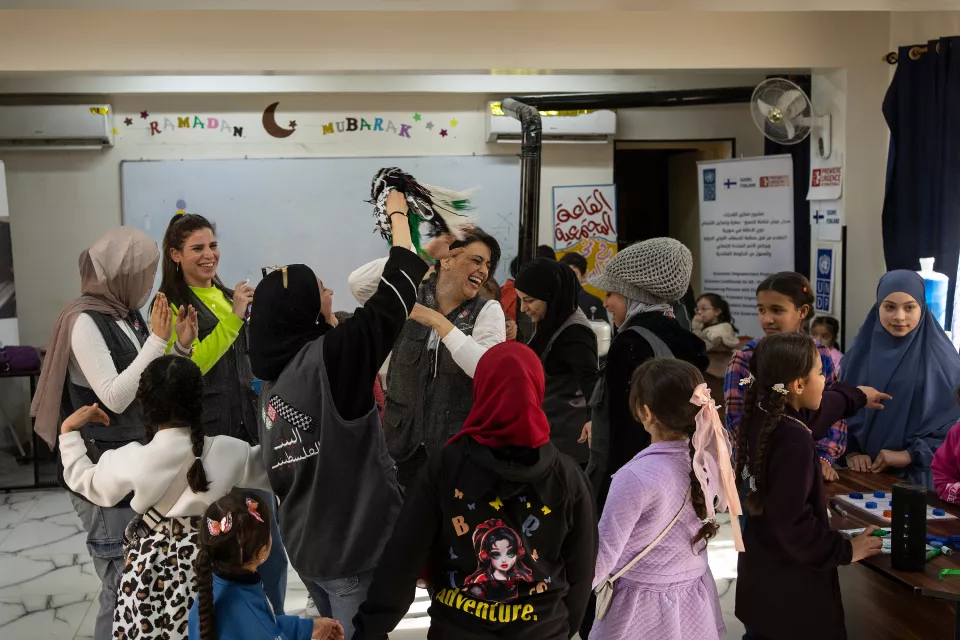
The Palestine House screens films with animations organized by volunteers. -
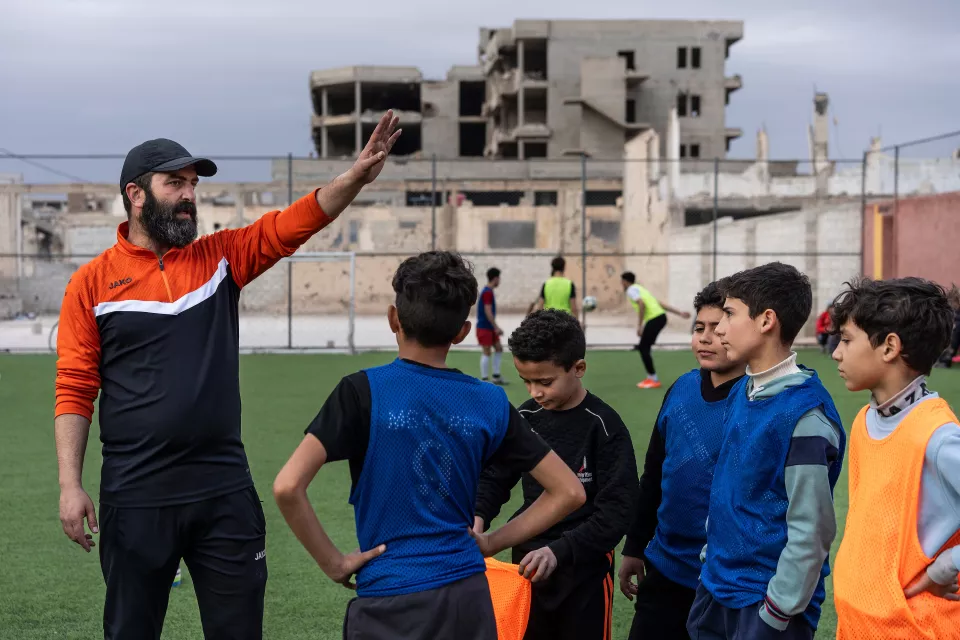
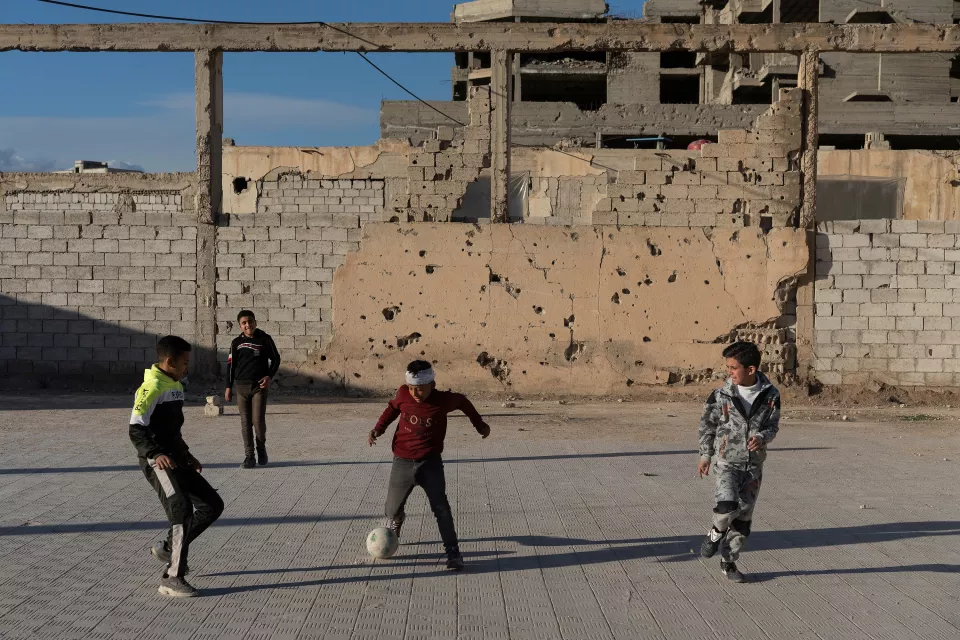
Yamin Hammeed, volunteer at The Palestinien House is an excellent football player. He coaches the Palestine House team every week. These activities are free for the youth of Yarmouk. -
-
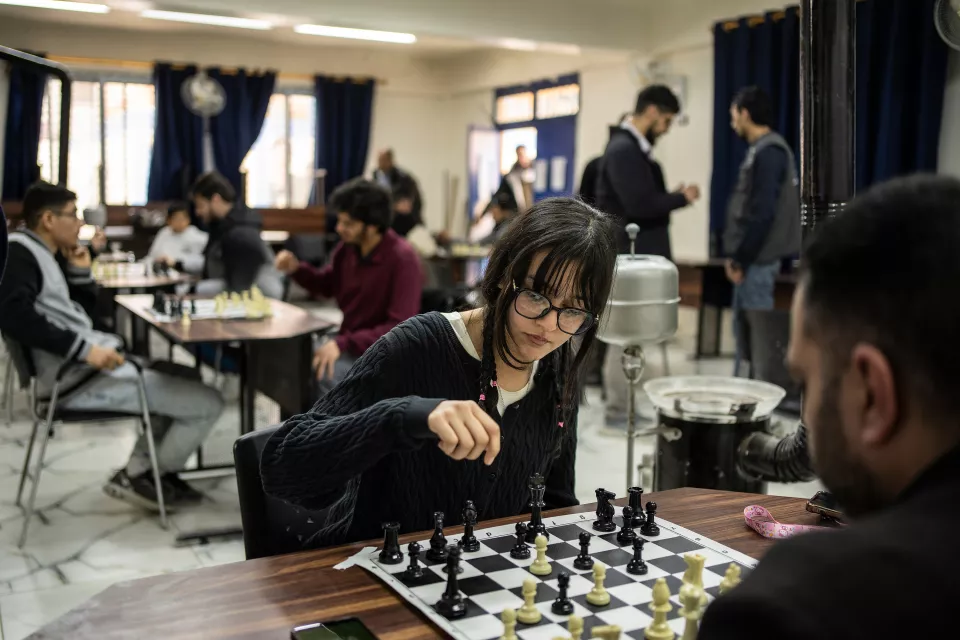
A chess tournament is being held in honor of Khaldoun's friend Hussein Taha, who died during the siege in 2015. He used to play chess with him regularly. -
-
Leila, 85, lived in Yarmouk throughout the siege. She was three years old when she immigrated to Syria after the Nakba. -
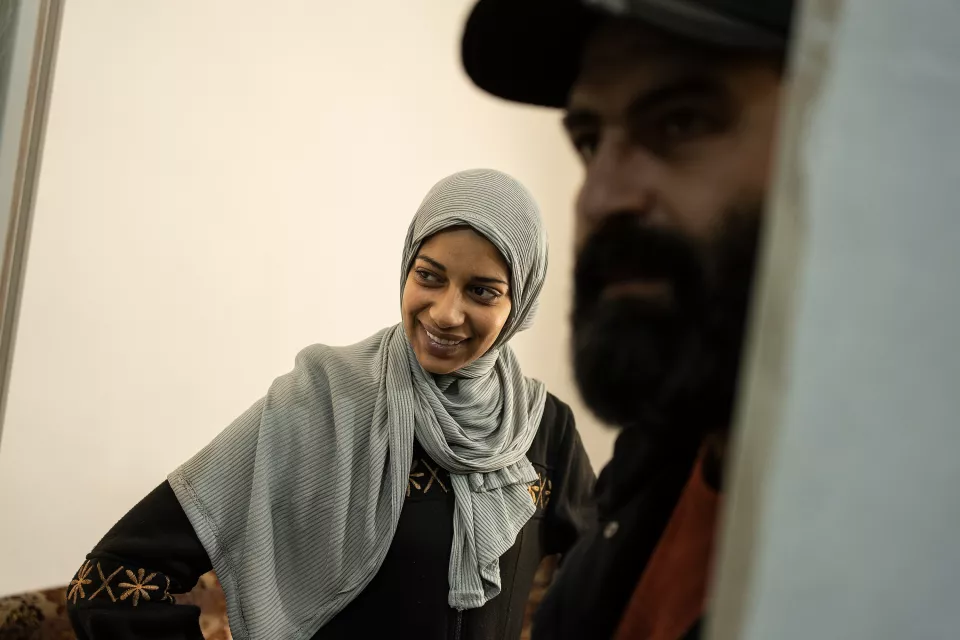
Aya (22) lives in this apartment with her mother, Nazha (54), who lost her husband and five children during the revolution. -
Dr. Khaldoun Muawiyah Al-Mallah, 43, director and founder of The Palestinian House. -
-
-
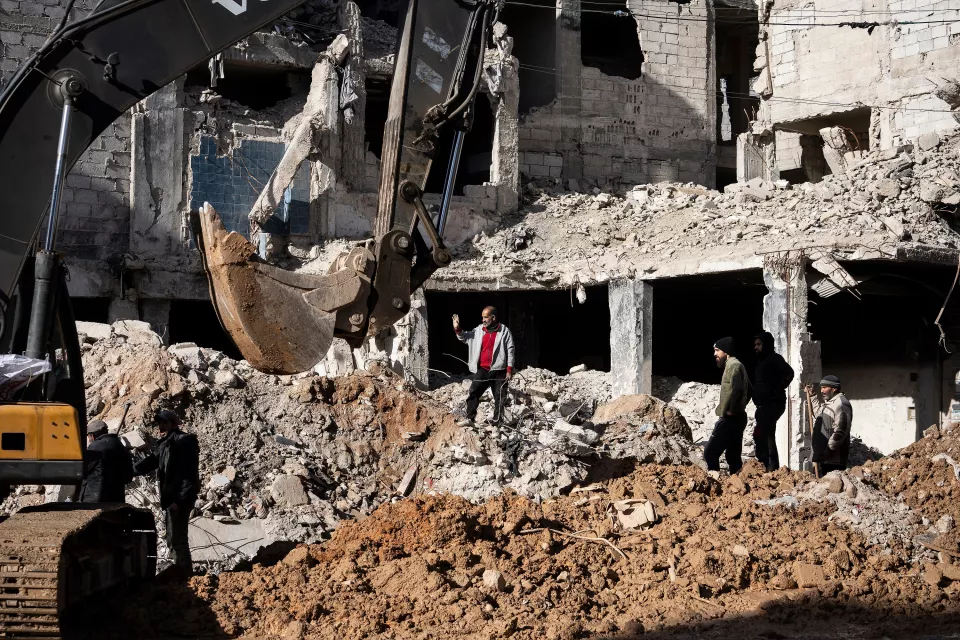
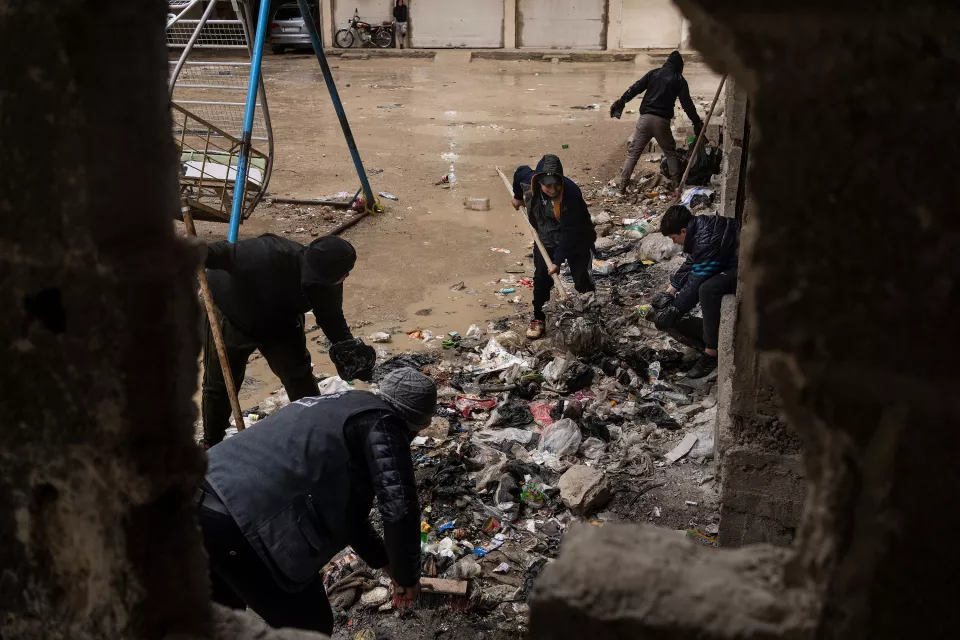
Every Saturday, the Palestine House organizes a garbage collection with volunteers. -
-
The Palestine House screens films with animations organized by volunteers. -
The Palestine House screens films with animations organized by volunteers. Today's film is "Forever Green". -
The Palestine House screens films with animations organized by volunteers. Today's film is "Forever Green". -
-
The Palestine House screens films with animations organized by volunteers. -
The Palestine House screens films with animations organized by volunteers. -
-
-
-
Beit Falestini (the Palestine House)
Created by residents of Yarmouk refugee camp the largest Palestinian community in Damascus, the Palestine House provides education and emotional support to children, many of whom have endured trauma and loss.
Syria — Beit Falestini
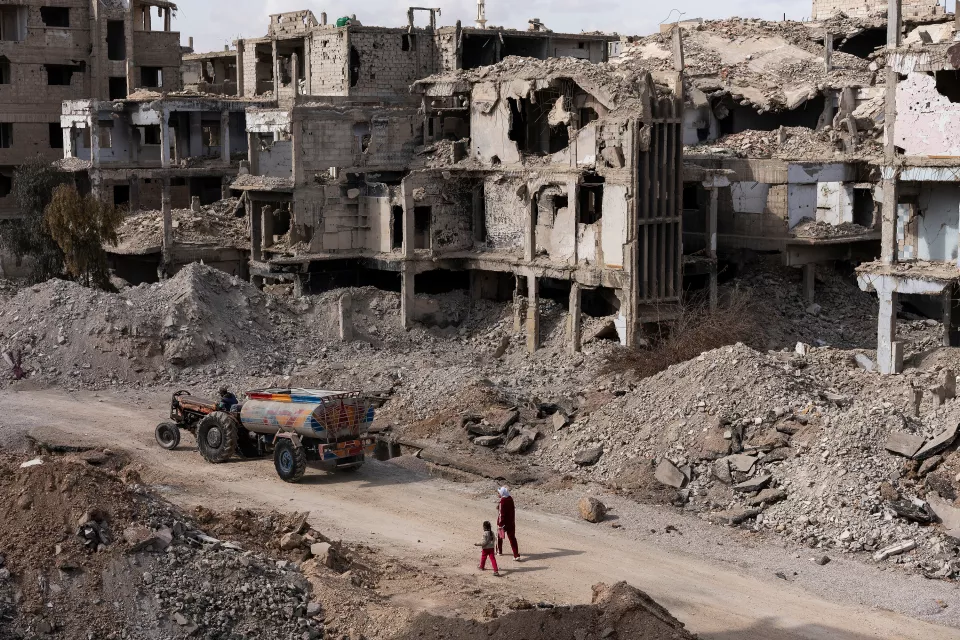
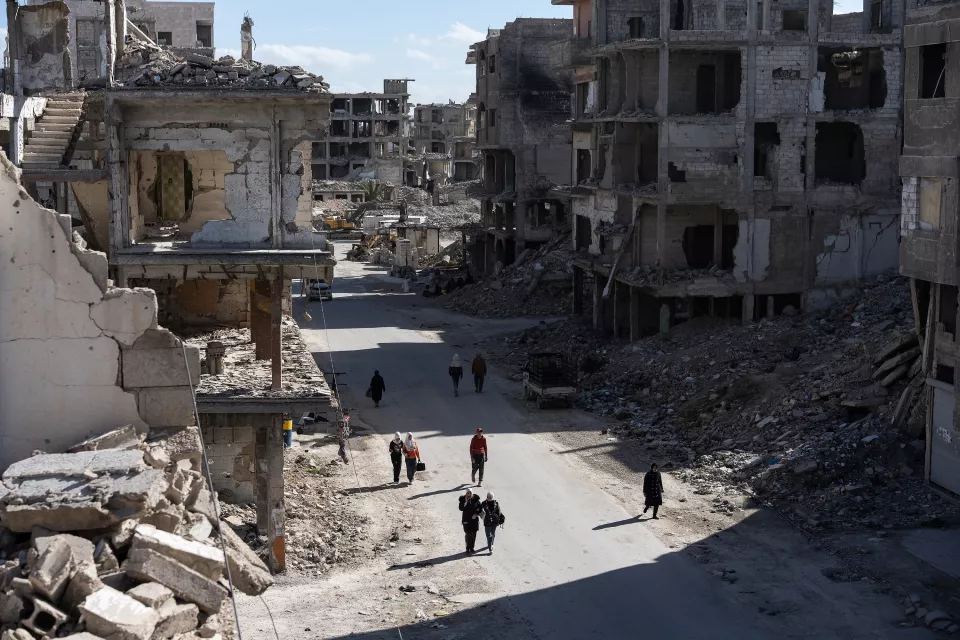
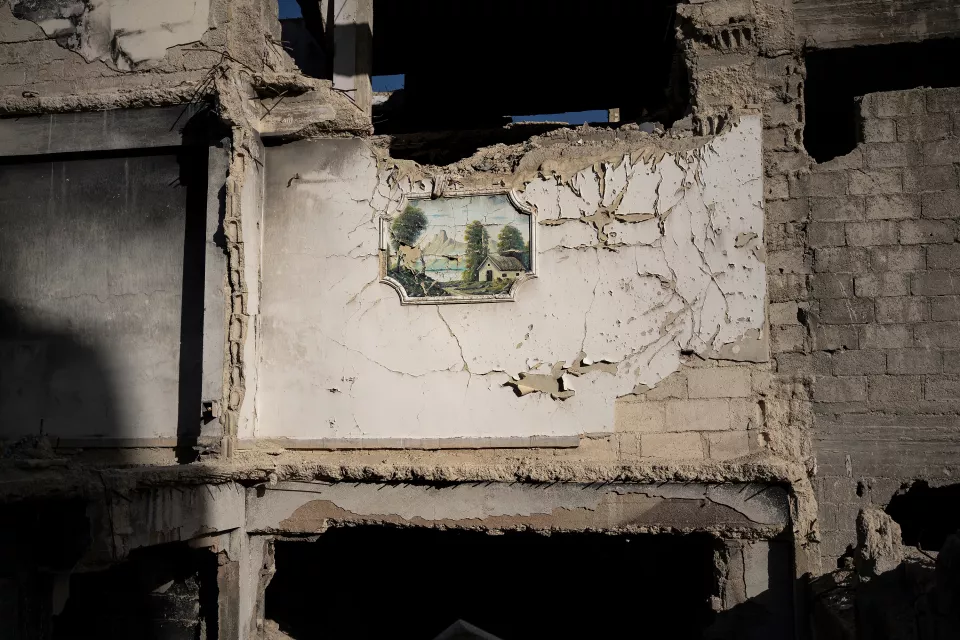
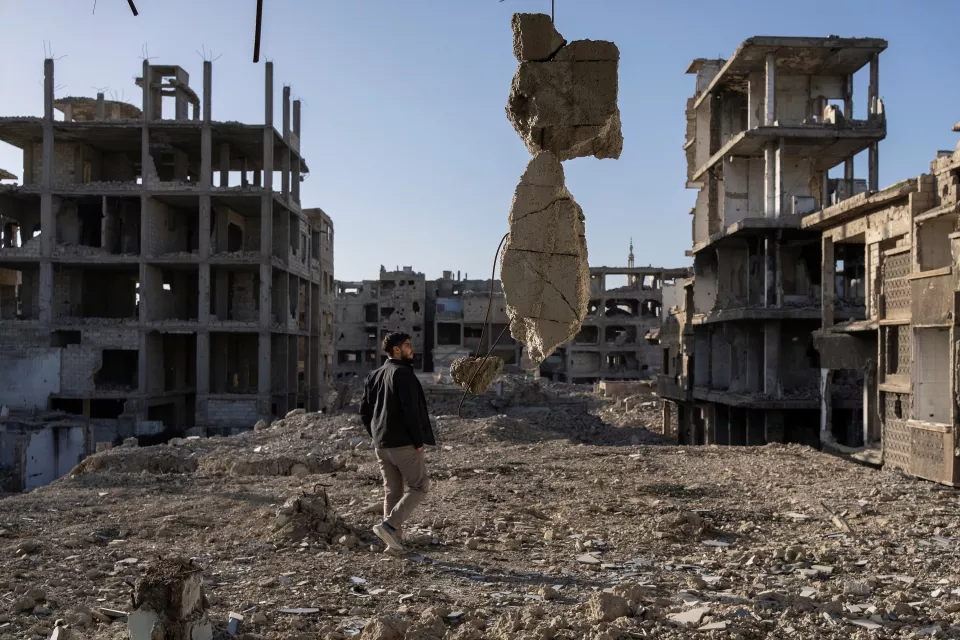
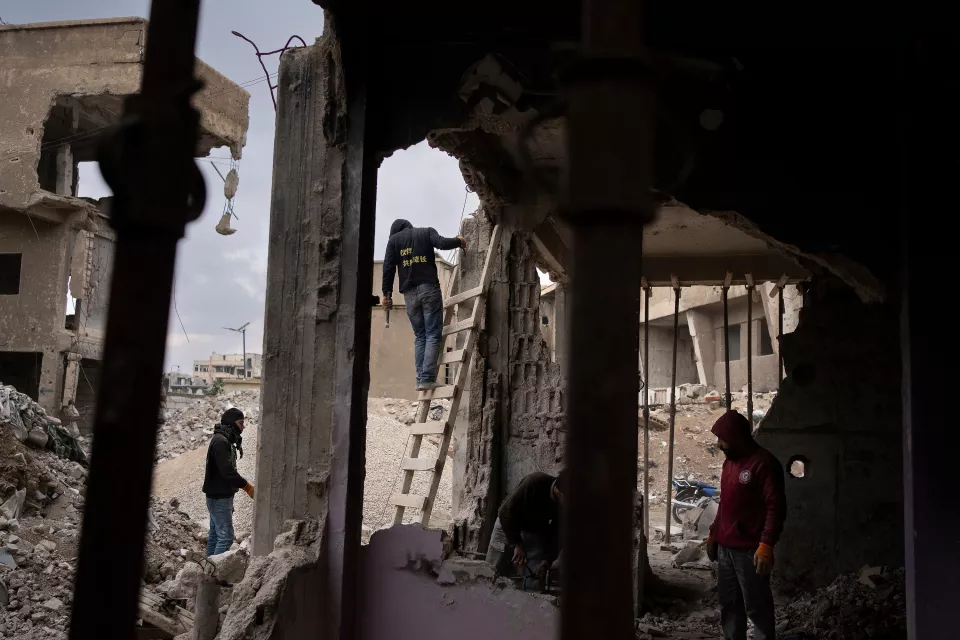
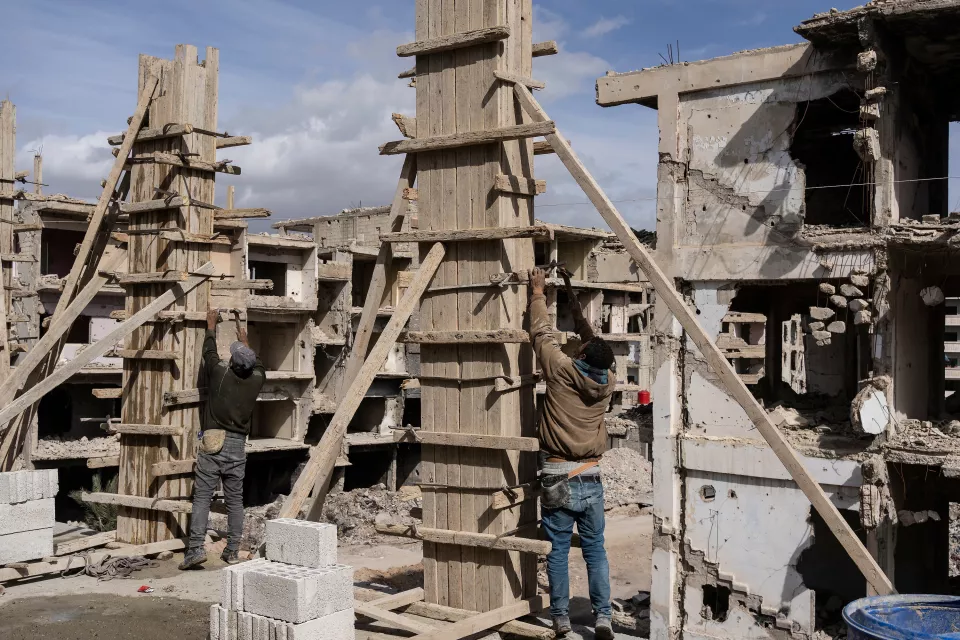
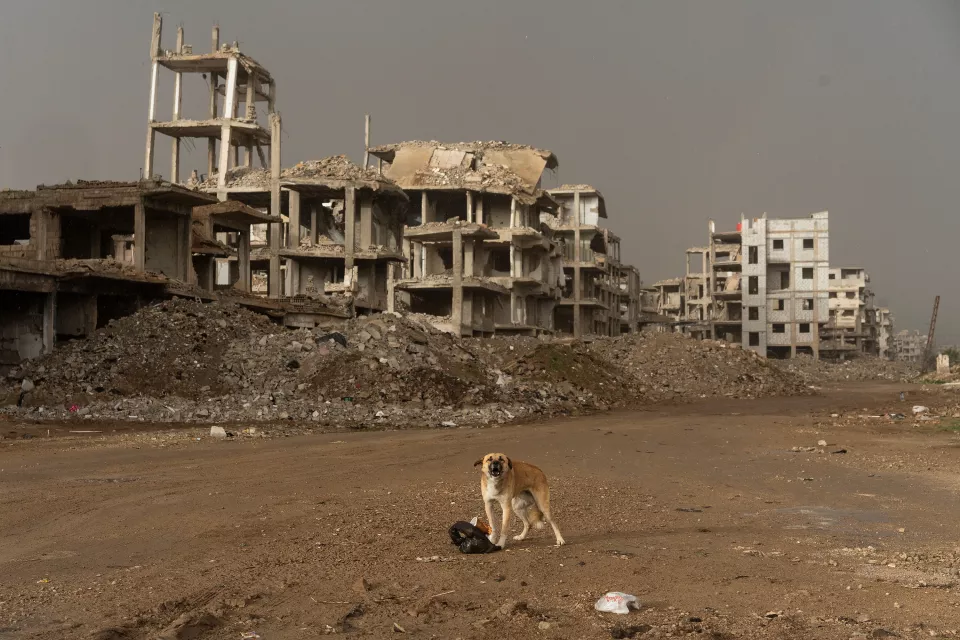
Eight kilometres south of Damascus, Yarmouk Camp was once home of more than 160,000 Palestinians and known as Little Palestine in exile. After a decade of bombardment, siege, and war, much of it is rubble. Approximately 65,000 people have begun to return. In classrooms opened against the odds, on football pitches cleared from debris, and in a free medical clinic that never closed, the work of recovery is already underway.
In 2026, The PhotoBridge Project worked with photographer Olivier Jobard to document that recovery. His images tell the story of a community that refused to wait: children learning Arabic and English in buildings still scarred by conflict, a volunteer coaching the next generation of players among the ruins, a doctor treating patients whose bodies carry the long-term toll of years without adequate care.
The stories revealed here show how residents of Yarmouk, despite the scale of destruction around them, are building education, healthcare, livelihoods, and belonging for themselves and their children. They are a testament to the determination of Beit Falestini's founders and to the deep-rooted strength of a community that has survived displacement twice and is not finished yet.
About Beit Falestini
Beit Falestini, the Palestinian House, is a new independent civil society initiative based in Yarmouk Camp, Damascus. Founded in the immediate aftermath of the fall of Bashar al-Assad's regime by people from the camp itself, it works across education, public health, livelihoods, and community services to support residents who have returned and encourage those still displaced to come back.
Through free classes for children aged 9 to 12, expression workshops, animated film screenings, and a medical clinic providing care at no cost, Beit Falestini offers both immediate support and long-term investment in the capacities of individuals and families. Its vision is a self-sufficient community, capable of expressing itself intellectually, culturally, and politically, built by the people who know it best.